where printing earns its place.
Printing doesn't make a better panel. The useful question is where a printer pays its way in a Ghana install.
A printed solar cell. Printed perovskite is at pilot scale in China and costs about twice silicon at best. Printed organic film runs at 7 to 8% with no published price.
A printed mounting system. Pellet printers lay down 1 to 3 kg an hour, and plastic in tension creeps in the heat. The one recycled-plastic roof mount that reached market was withdrawn; US fire codes caught plastic mounts in 2015.
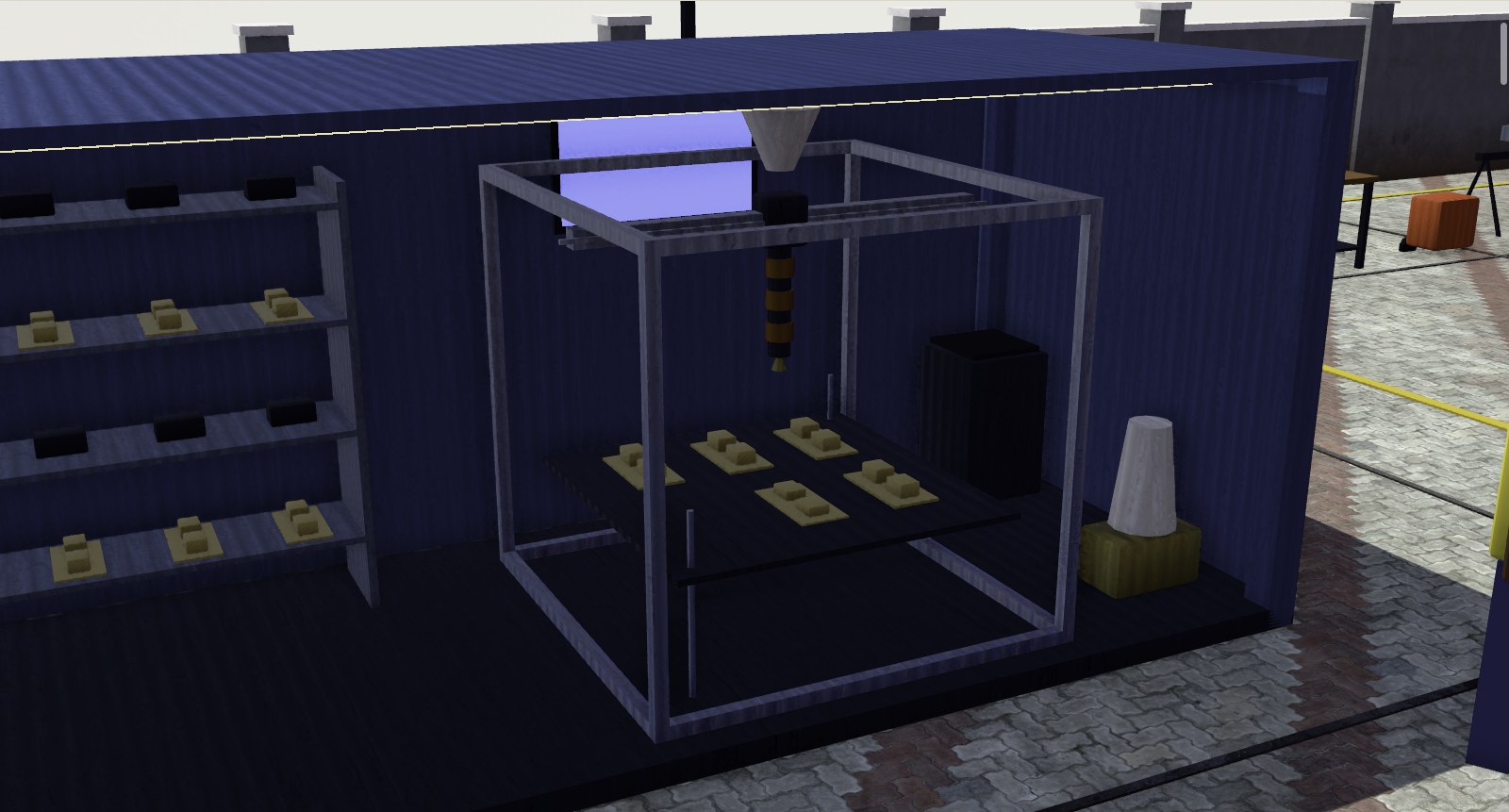
Printed tooling. A half-kilo insert turns a standard sandcrete block mould into a ballast-mount mould. Saddles are printed to one roof-sheet profile. Kilos of plastic per project, not tonnes, and past a few hundred of one part it moves to an injection mould.
Design software. Layout, ballast map and battery size come from a roof scan and two weeks of logged load. Close to nothing per job once built.
Weight. Cast blocks swap imported aluminium for about 80 kg of concrete per module, all of it lifted to the roof. Hoist, scaffold or crane time comes out of the saving.
Whether mounting is a big enough line. No Ghana cost split by line has been published. If mounting, cabling and labour come to under about 5% of the bill, the printer drops out and the software leads.
what it could be worth.
Ranges, not promises. The mounting figure is the designs' own estimate and nobody has tested it in Ghana yet.
off mounting if the $0.03 to $0.06 a watt estimate holds. 4 to 8% of the $767/kWp GIZ models for Ghanaian commercial roofs.
The cedi went from 16.35 to 10.70 to the dollar in fourteen months. Imported racking carries that swing; blocks and local steel are bought in cedis.
On a compound with a battery, the battery is about half the parts bill. Sizing it from logged load is the largest line any of this reaches.
Lifetime value of a 3% yield gain at a 15% cost of capital. Cleaning timed to the harmattan is worth more than that.
LPV already sells in Nigeria on naira pricing, short lead times and a local warranty. A mount cast in Ghana takes the same argument to the heaviest part of a Ghana job, and every roof LPV quotes needs one.
against the whole job, in dollars per watt
the parts list.
| Part | Made of | Made how | Design against |
|---|---|---|---|
| Mould insert printed | PETG or ASA, about half a kilo | pellet printer, one file per roof type | wear in the press: reprint it |
| Roof-profile saddle printed | ASA or glass-filled PP | printed from the roof scan | UV cracking at the bolt: a steel sleeve takes the clamp force |
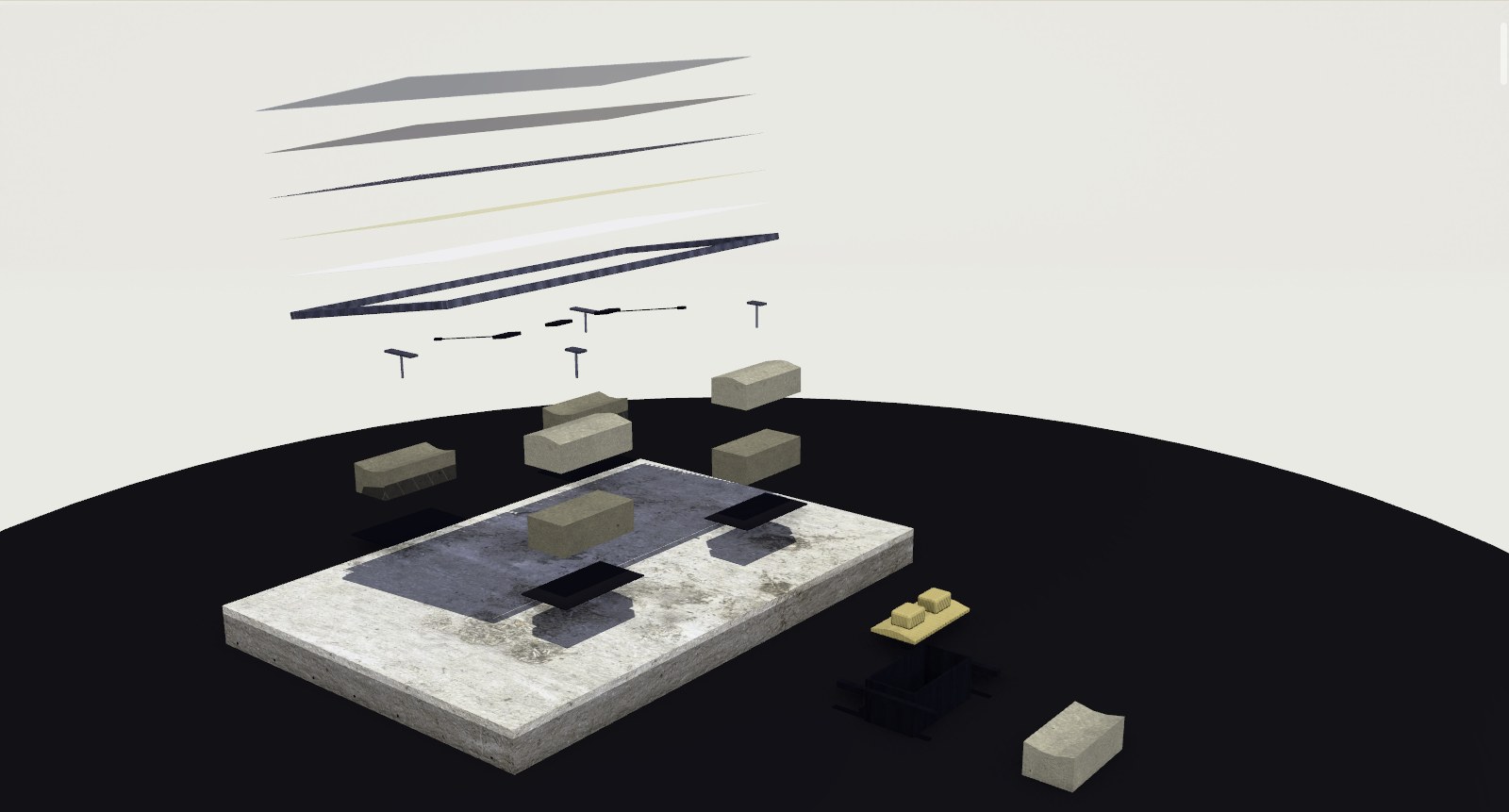
| Solar block cast | sandcrete, about 30 kg solid | block yard, printed insert in the mould | yard-to-yard strength, slab load, sliding in a squall, about 80 kg per module to lift |
| Roof pad, clips pressed | recycled HDPE with 2% carbon black | shredded and sheet-pressed | creep near 70 °C: squeezed only, never bent |
| Hooks, rails, carport local steel | galvanised steel, stainless bolts | welded and galvanised nearby | coastal rust at cut ends: cold-galvanise every cut |
| Module, inverter, battery, cable bought | certified product | imported | warranty: clamp only where the maker allows |
the ground decides the method.
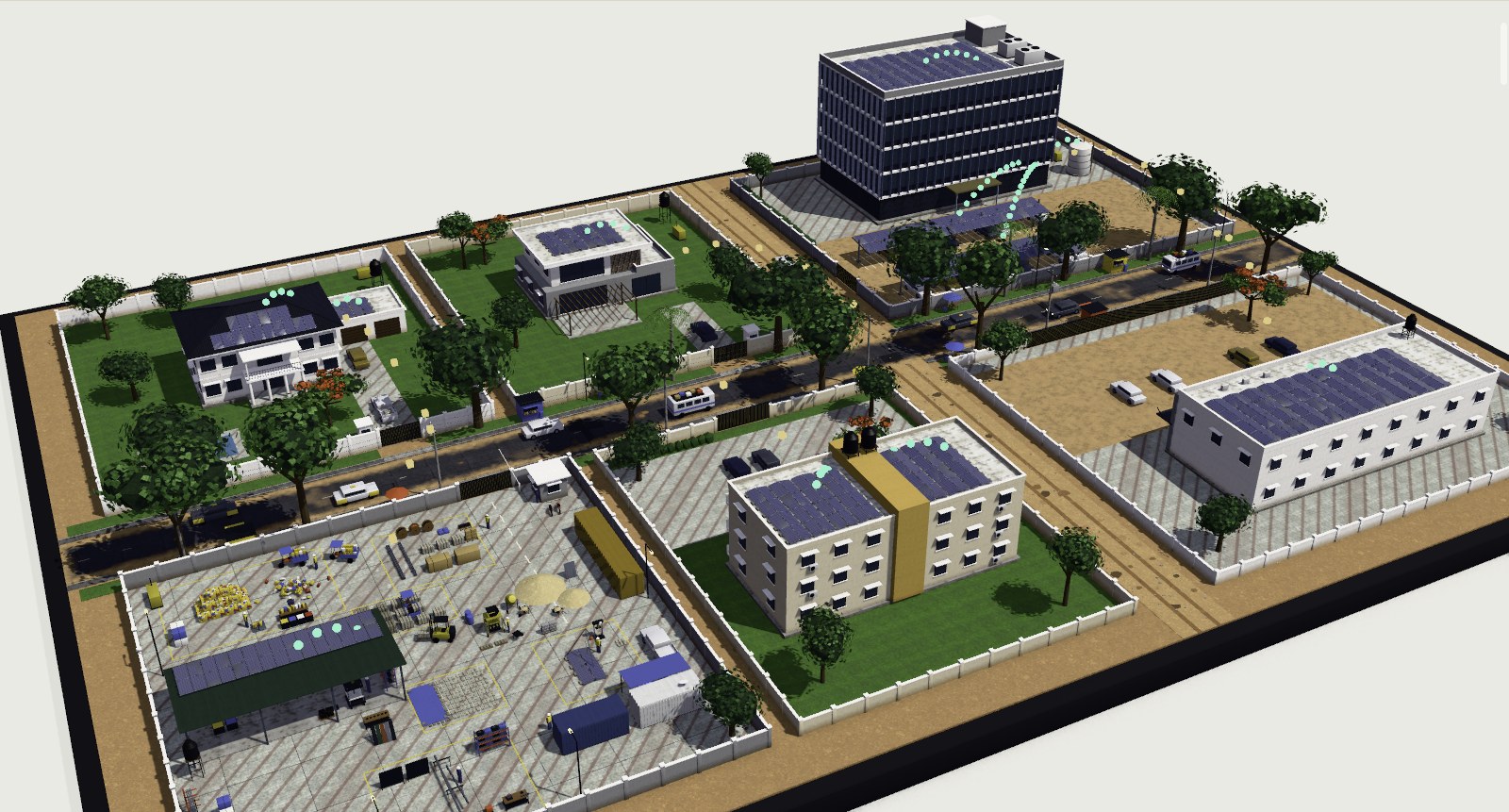
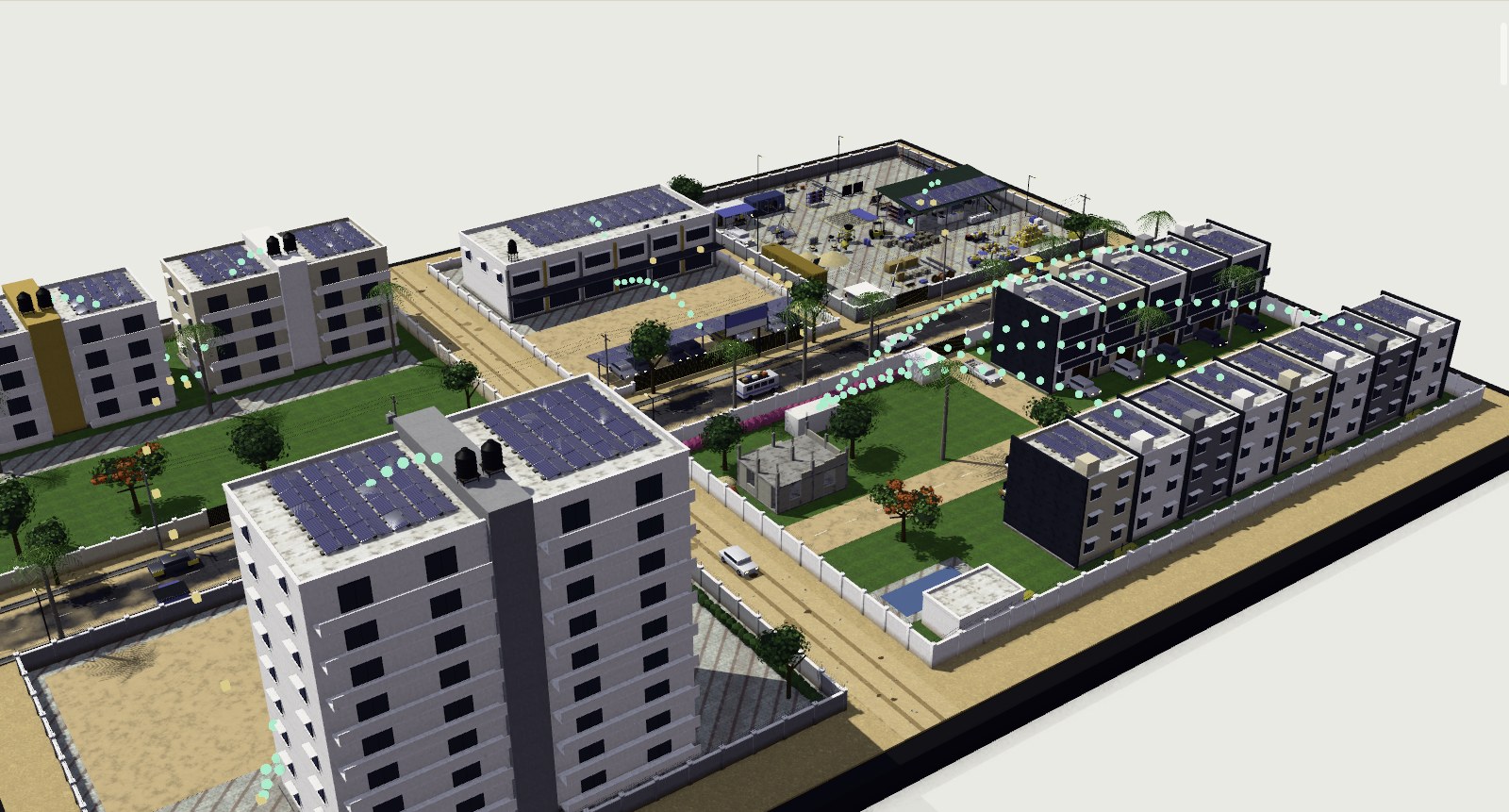
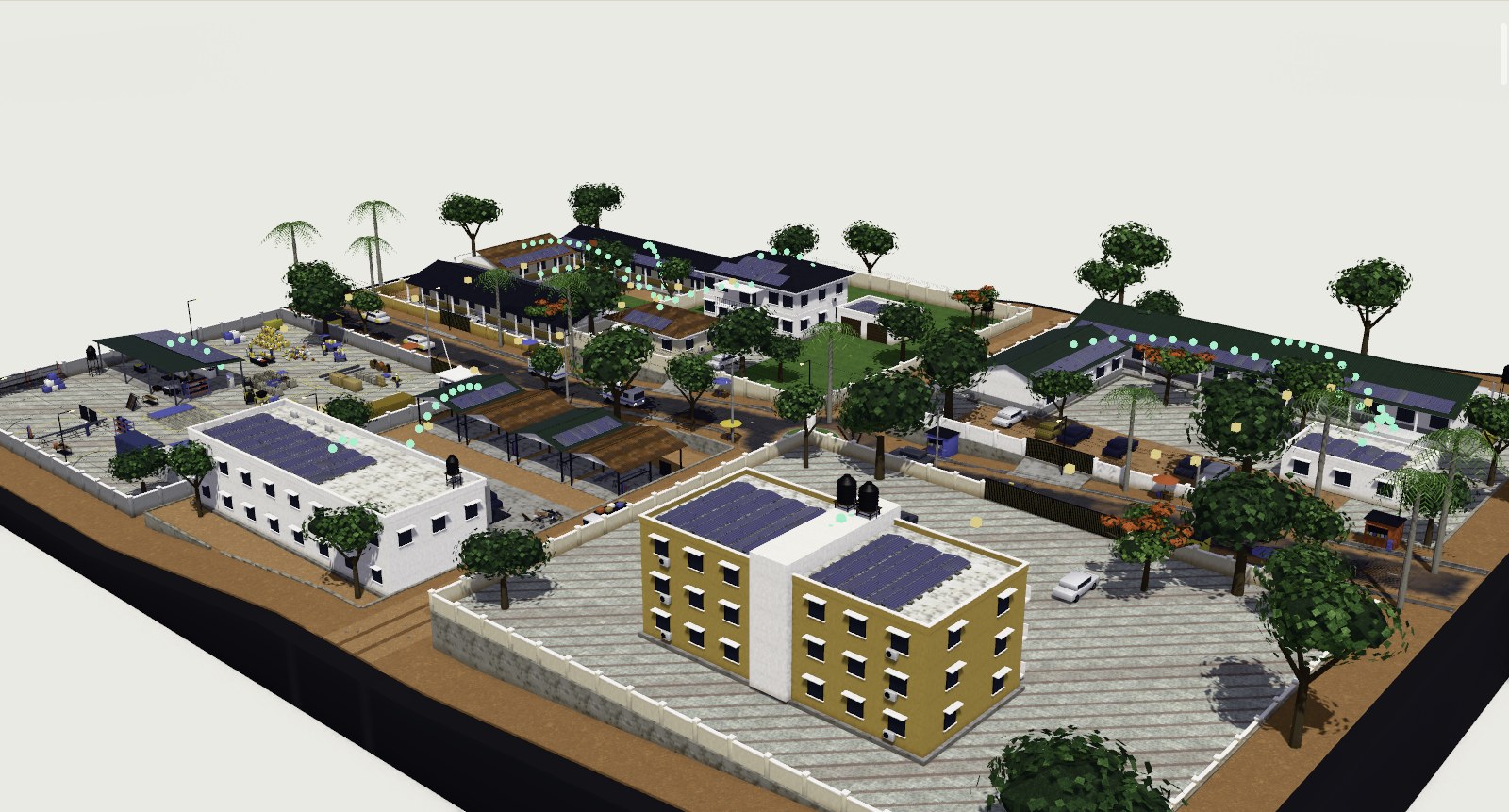
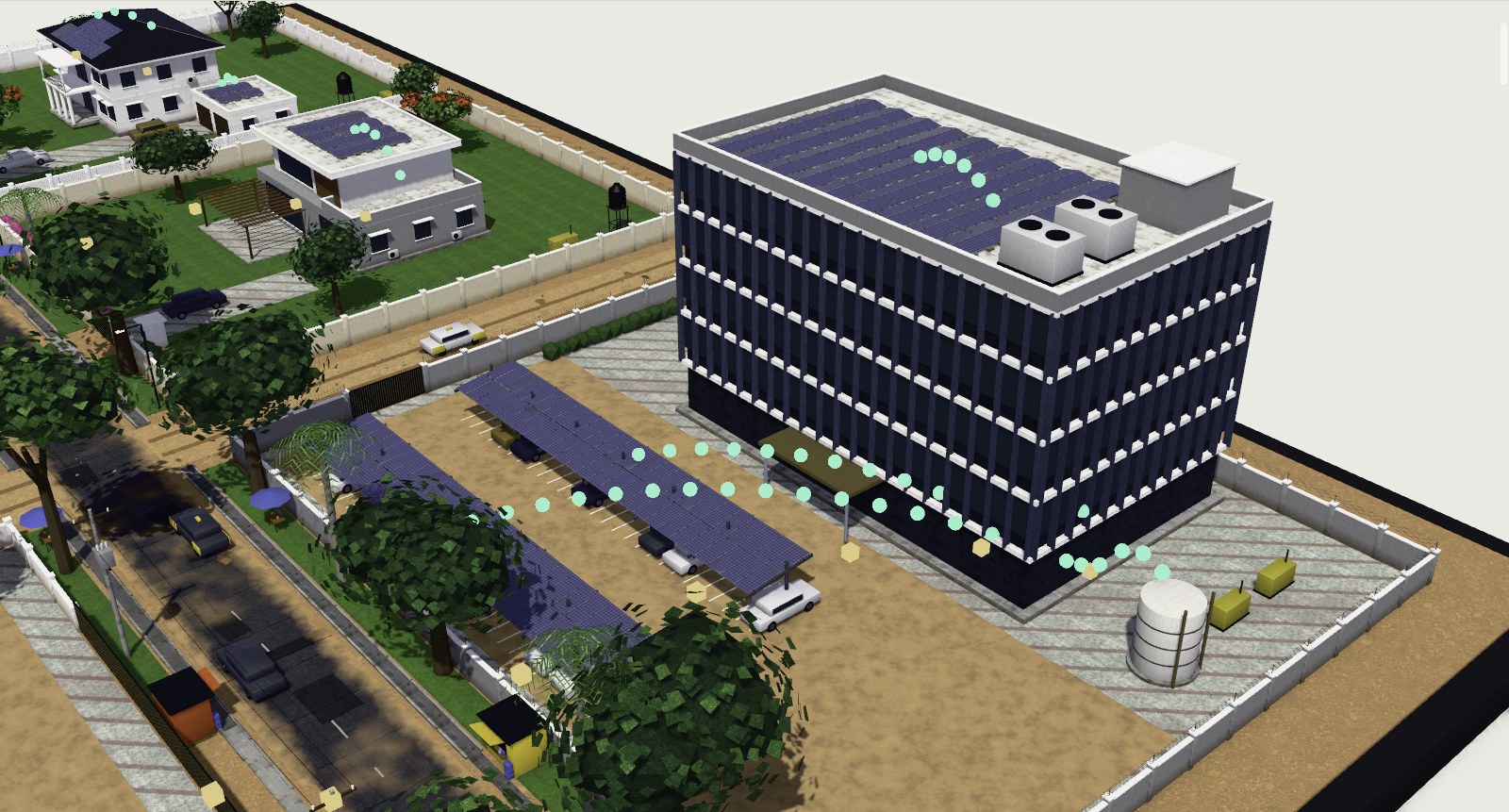
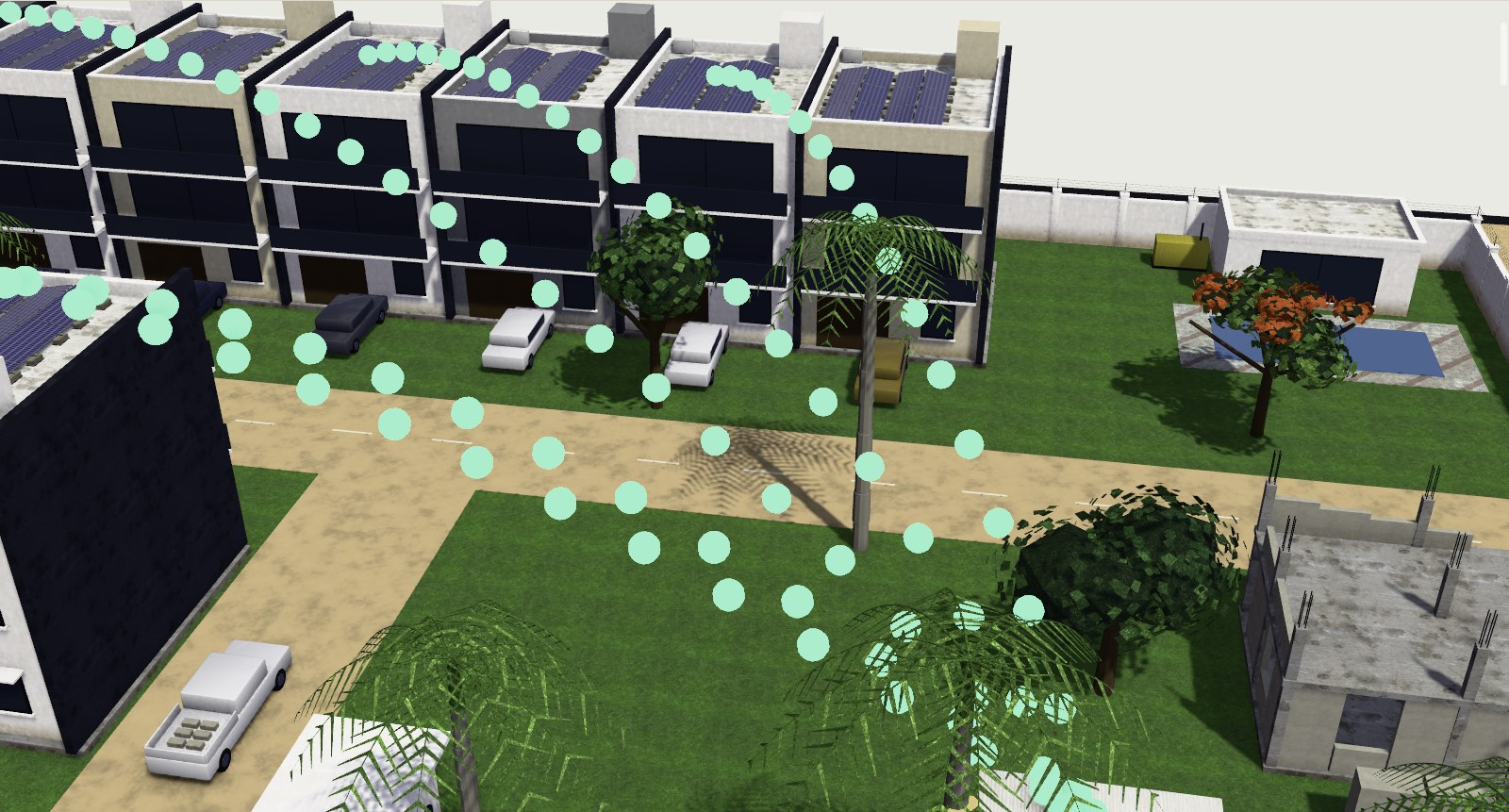
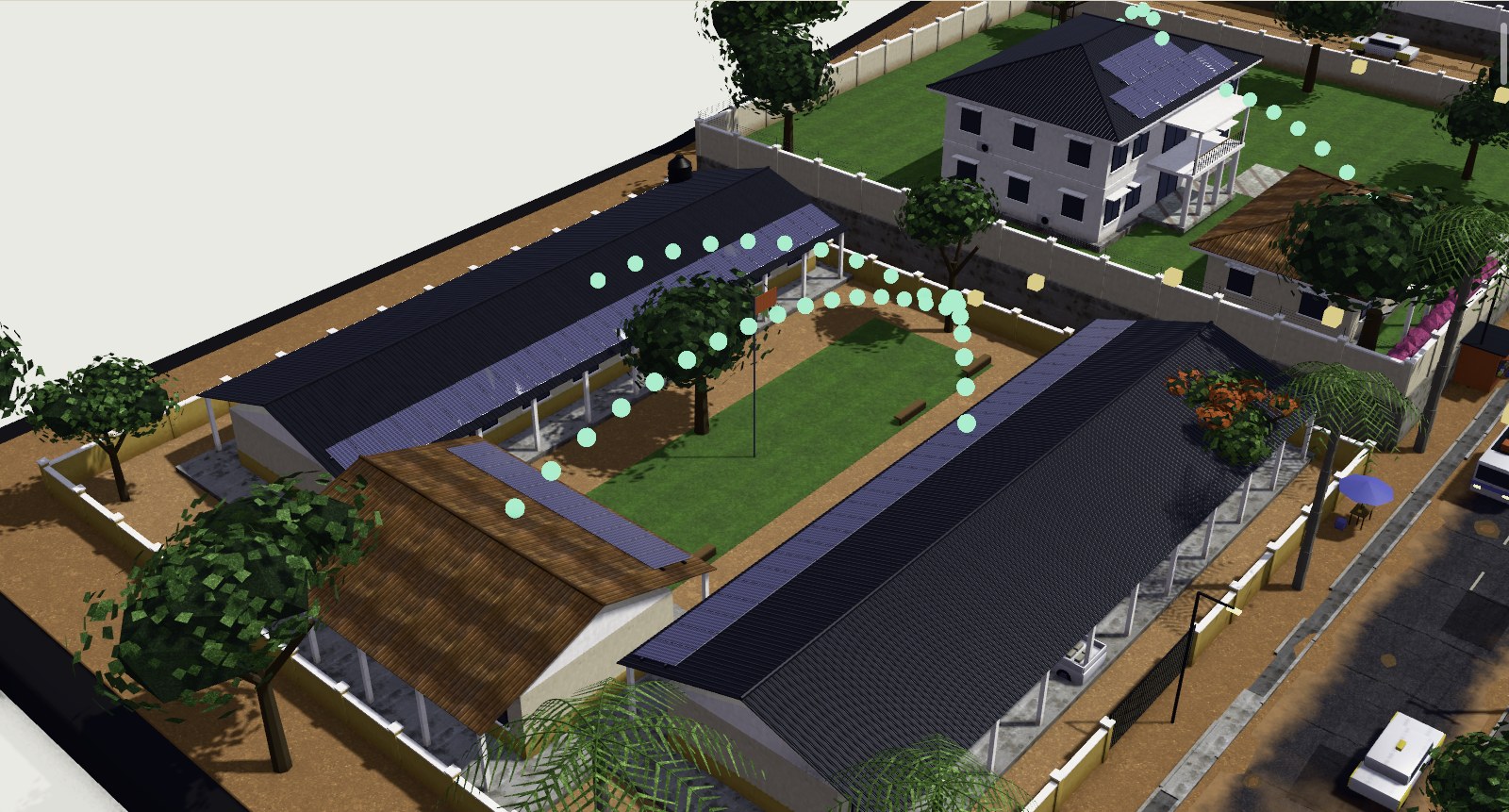
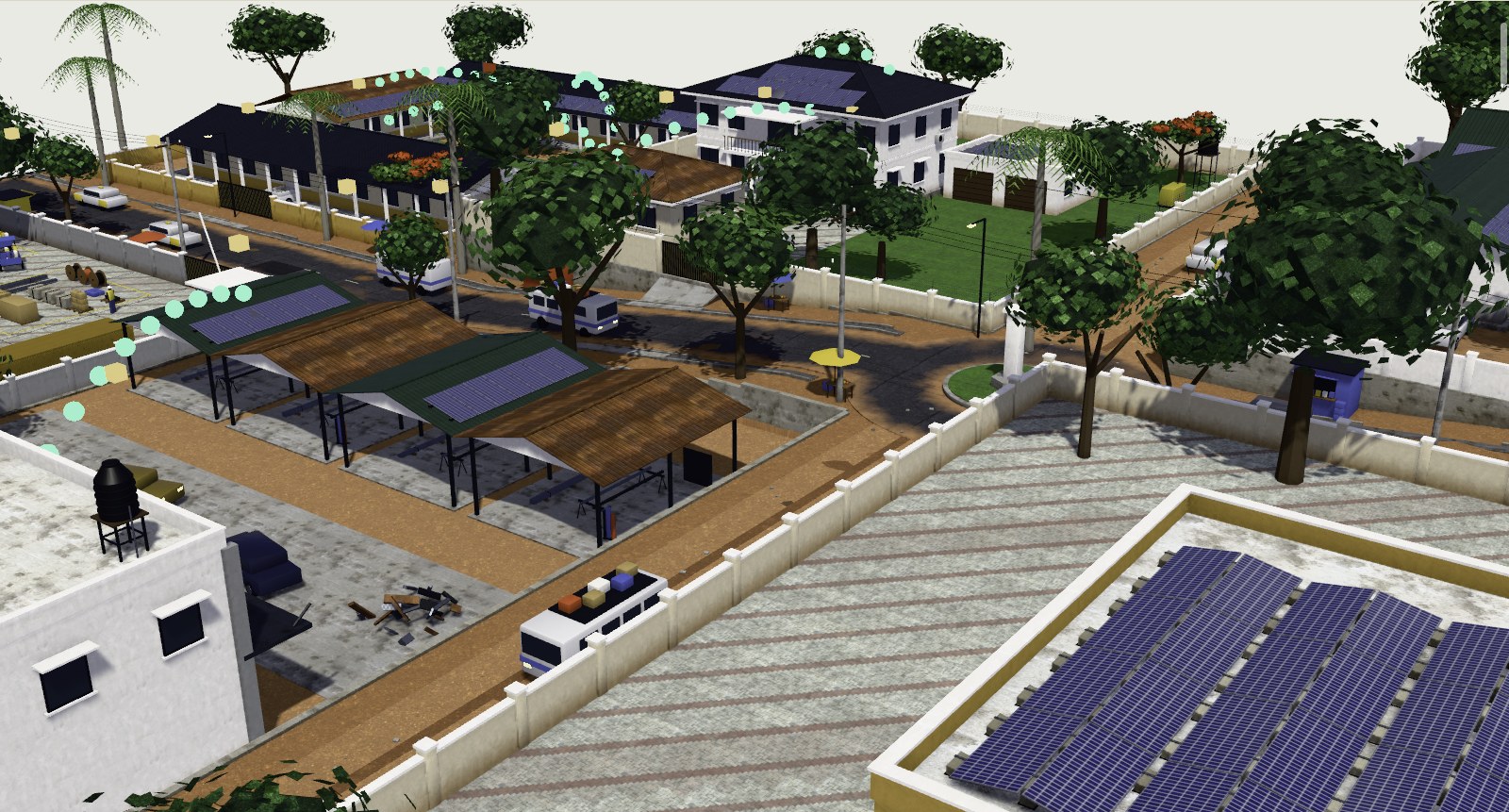
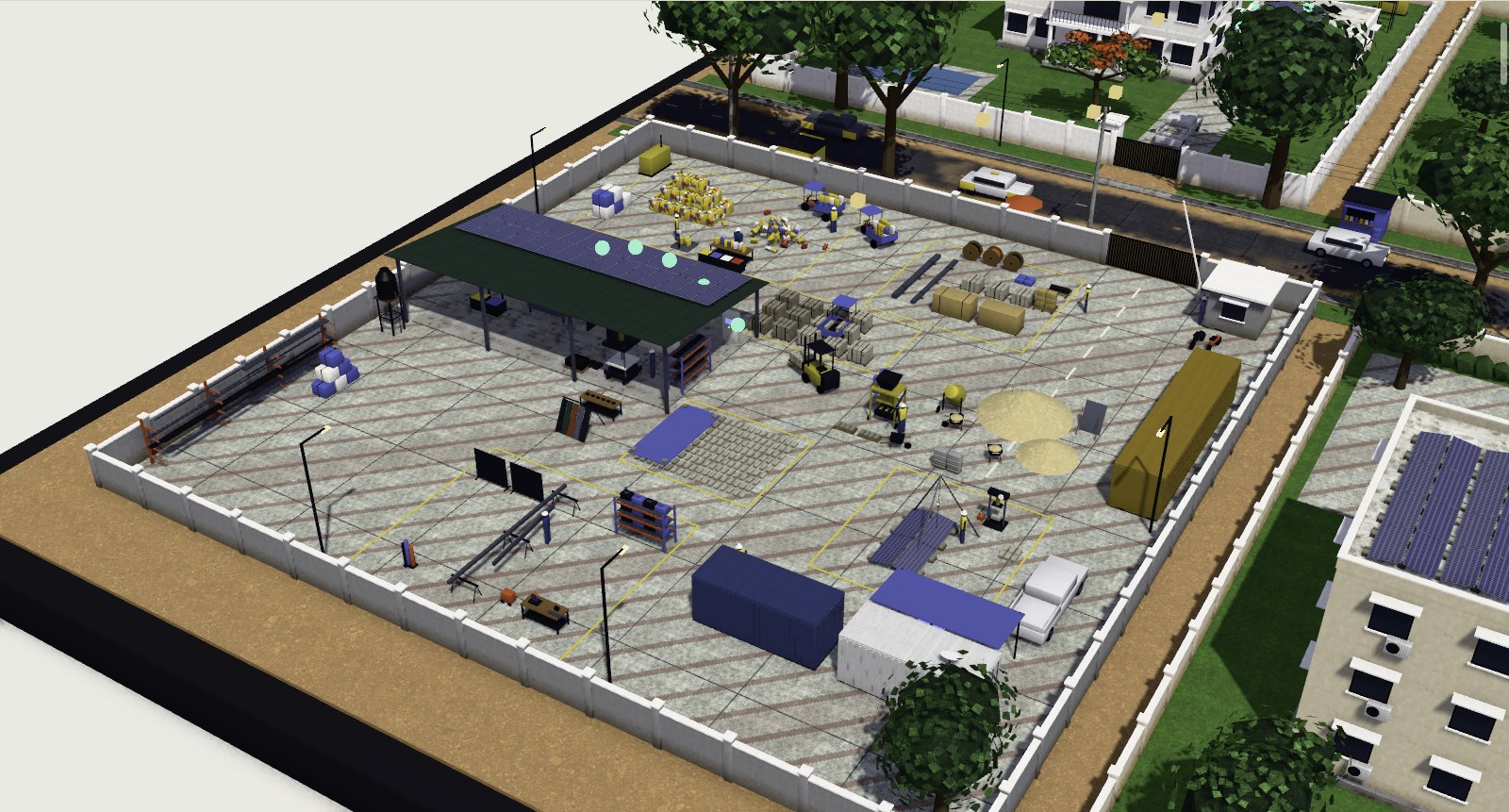
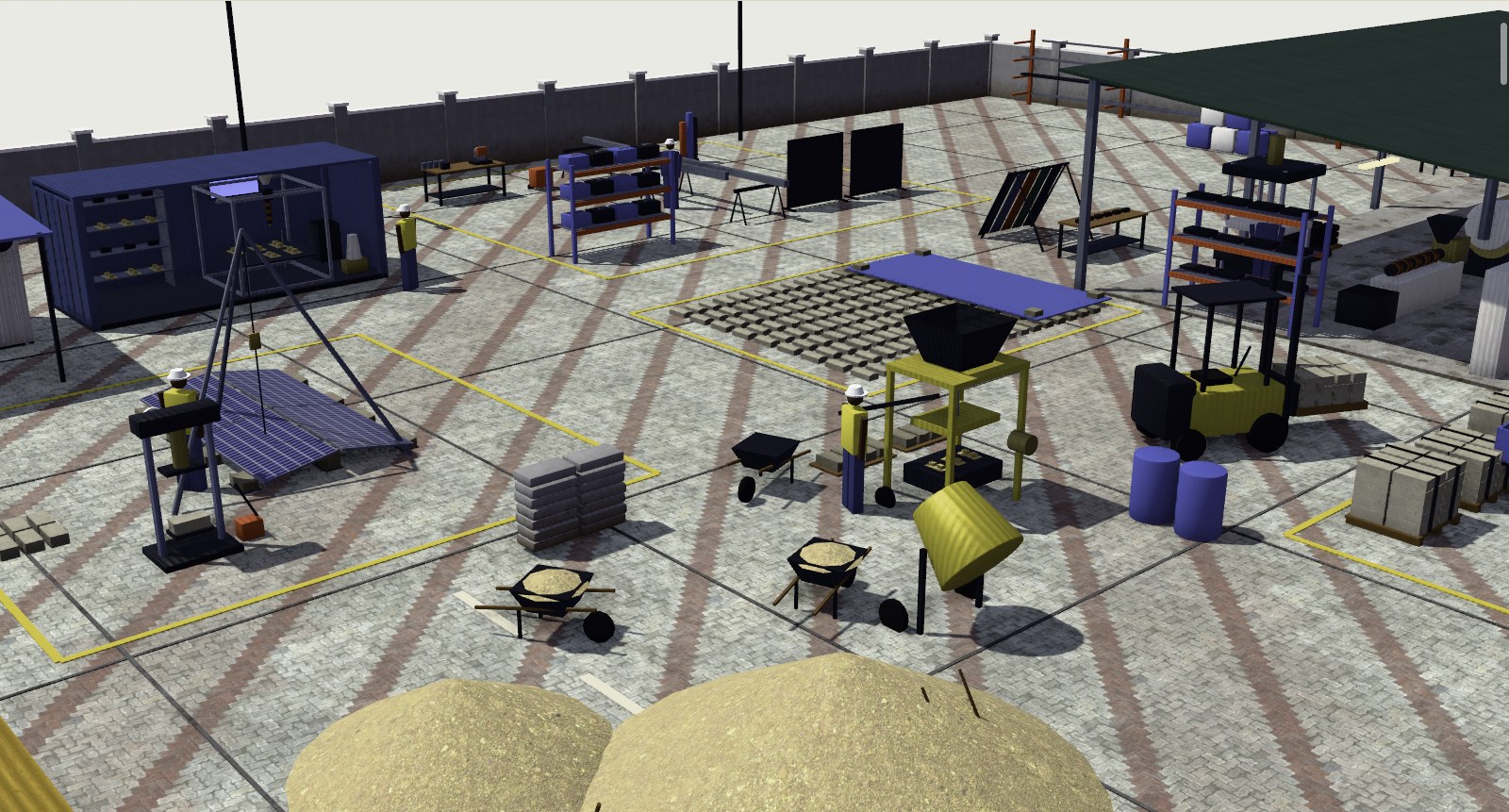
Cantonments is flat, shaded and walled, and it is where LPV's Accra office sits: slab roofs, so cast blocks and a crane. East Legon is newer and drier, with untarred side streets and a half-built house on most blocks: shared roofs, so carports do the work. Ahodwo sits on a ridge with plots terraced into the slope and sheet roofs throughout, so it runs on printed saddles and local steel.
| Place | What is there, and what it means | Modules | kWp | Sun, kWh per kWp | MWh a year |
|---|
Kumasi gets about a tenth less sun than Cantonments on the same dataset, and more rain. Sun figures are PVGIS for each spot, two satellite datasets, 8° tilt, 14% system loss.
one place in numbers.
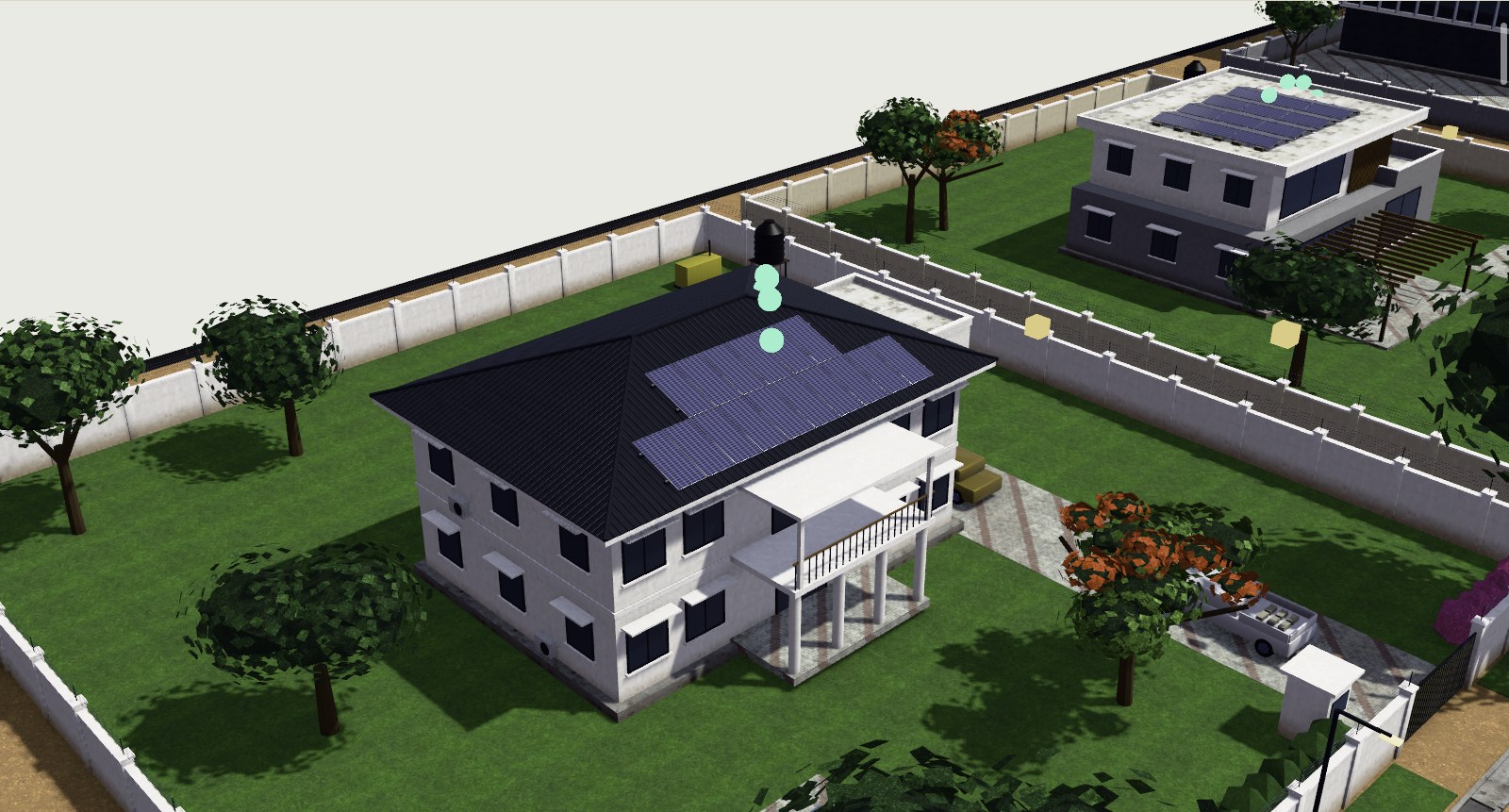
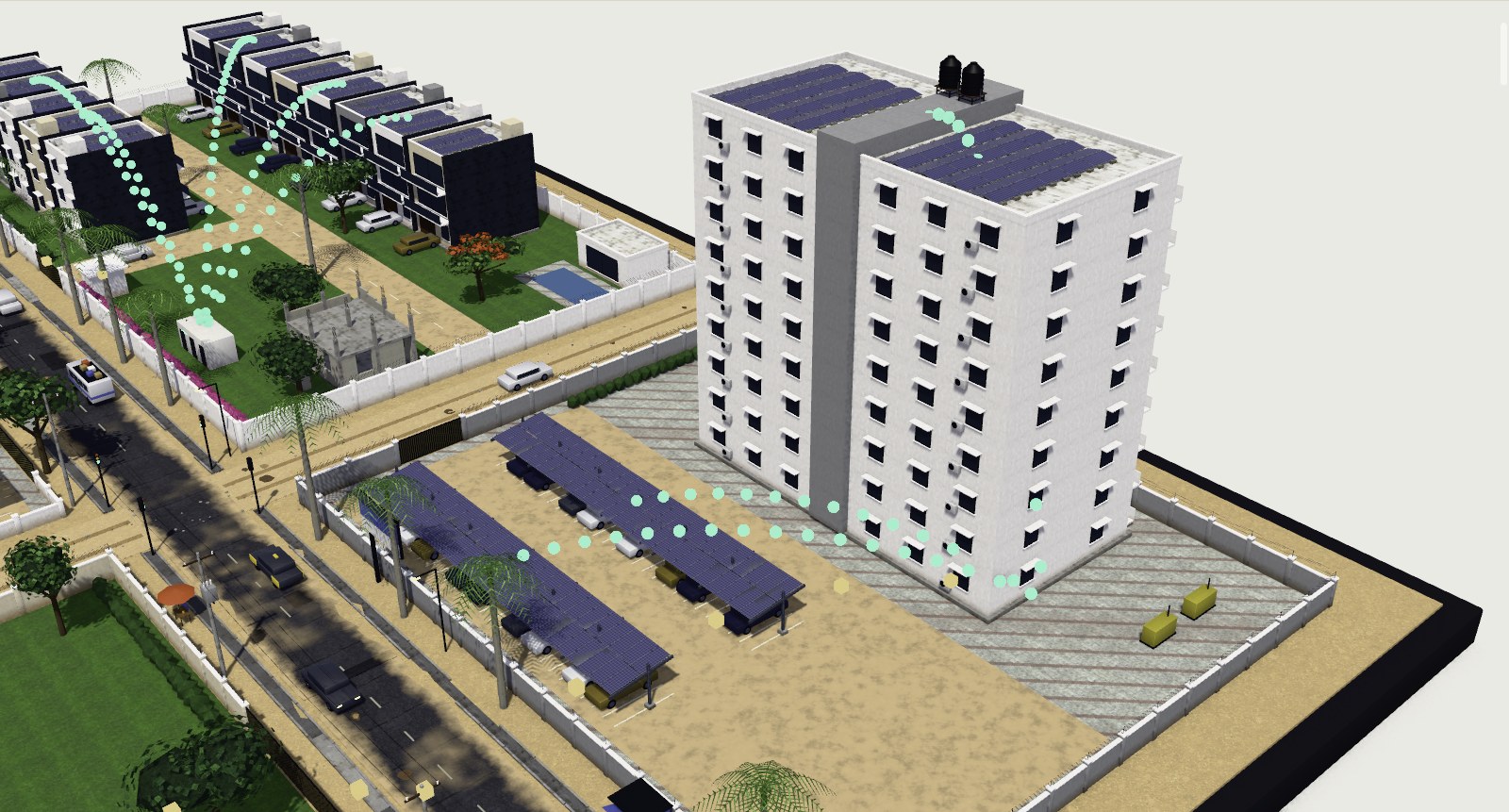
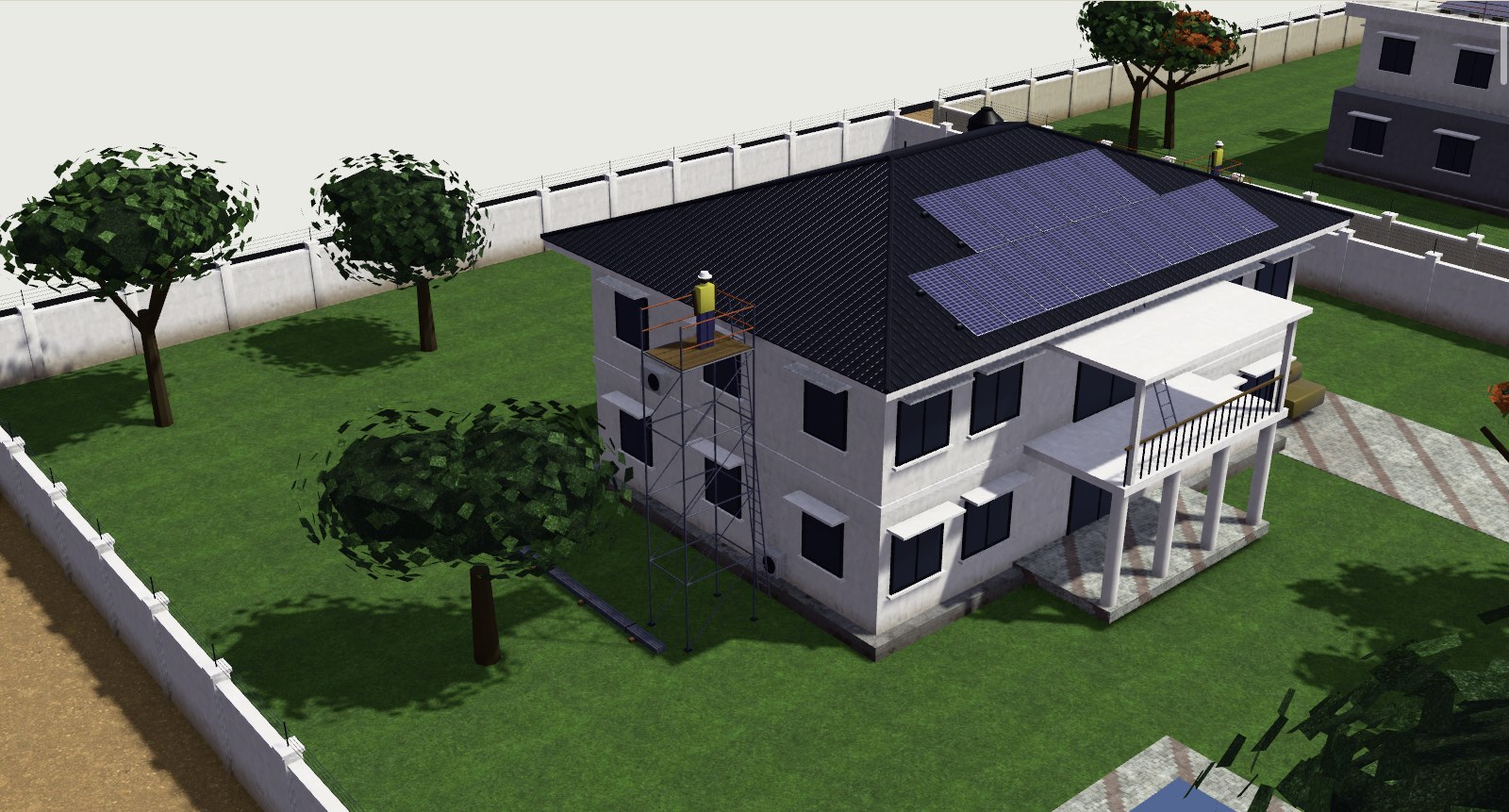
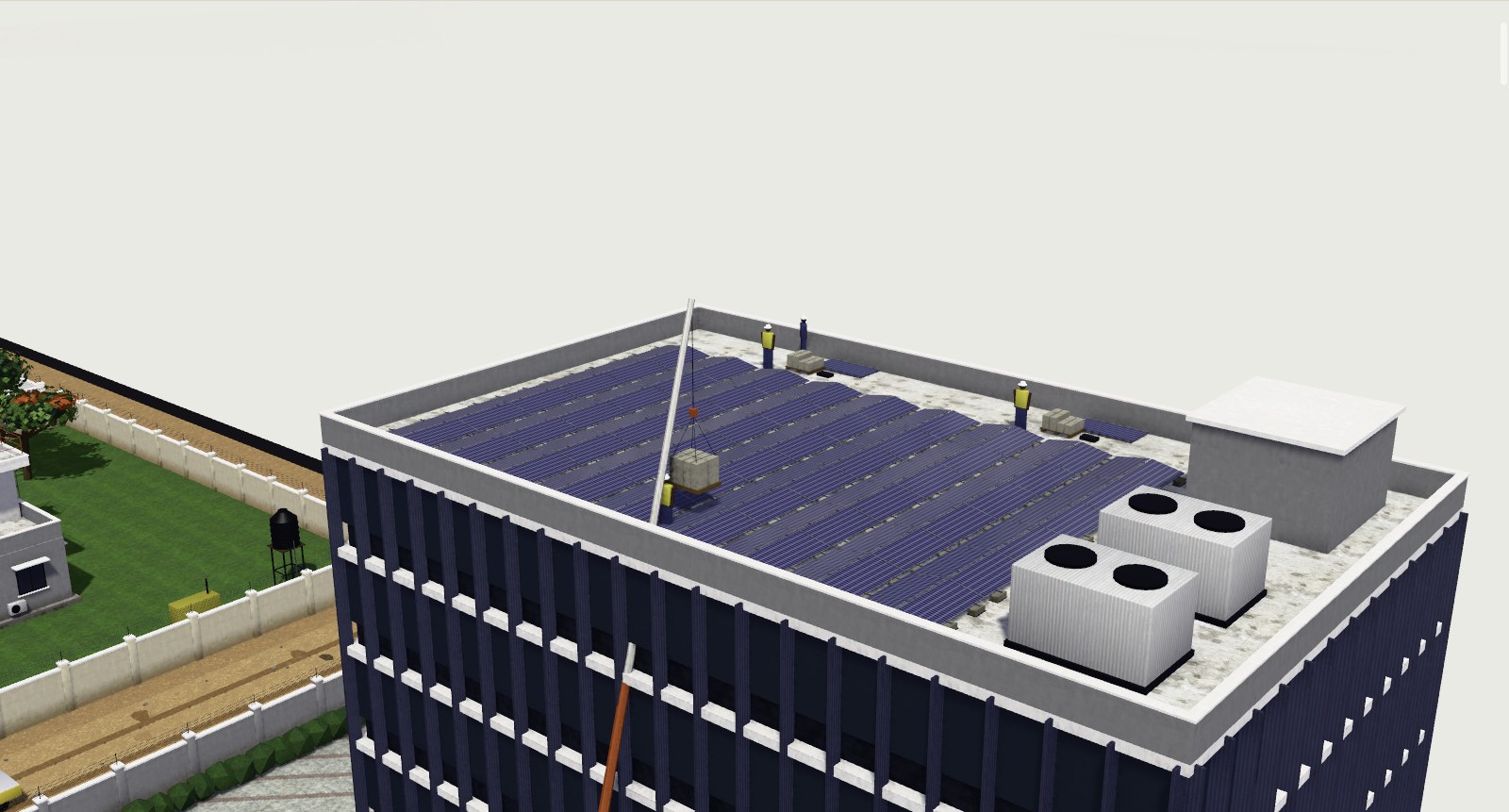
Counted from the 3D model, so the picture and the table agree.
| Building | Roof | Modules | kWp | MWh a year | Cast blocks | Pressed pads | Printed saddles |
|---|
proving it, for about $1,500.
Is mounting a big enough line? Three itemised quotes and one from a Tema steel fabricator. This one decides whether the rest is worth running.
Is roadside sandcrete strong and consistent? Crush-test 20 blocks from two yards, then a pull-up test on a four-module ground mock-up with a crane scale.
Does the ballast hold in a squall, and does the slab carry it? One engineer-day against the GS 1207 wind speed, and a friction pull on the real roof membrane.
Does pressed HDPE keep its shape hot? Coupons in a 70 °C oven and three loaded pads on a roof for eight weeks, sag measured weekly.
Are batteries oversized? Clamp loggers on five homes for two weeks, set against the battery each was sold.
Will owners take visible blocks and a smaller battery? Two priced options shown to ten owners or facility managers.
the questions that decide it.
Each one is answered by LPV's own quotes and pipeline. Together they say whether this is a margin line, a pricing edge in tenders, or nothing worth chasing.
- What share of a typical Ghana quote is mounting, cabling and access, and how much of that is paid in dollars?
- How many commercial deals stall on lead time or on the cedi, rather than on price per watt?
- There is a block yard on most main roads in Ghana. With one printed insert each, how many become a supply point for LPV mounts?
- How often is a customer sold a bigger battery than their load needs, and what would a right-sized quote do to close rate?
where shippers comes in.
None of this needs hardware first. It runs in three steps, and each one decides whether the next is worth paying for.
- Quote teardown. Three recent LPV Ghana quotes, split line by line and set against the model. It answers the first question in about a week.
- A sizing tool for the sales team. Layout, ballast and battery from a roof scan and logged load, built on LPV's own product list, quoted on site.
- One test roof. Four modules on cast blocks beside LPV's standard mount, measured for a season, with the numbers written up for tenders.
stills.